

Kitchen Knife Types and Uses: Choose the Right Blade for Each Task
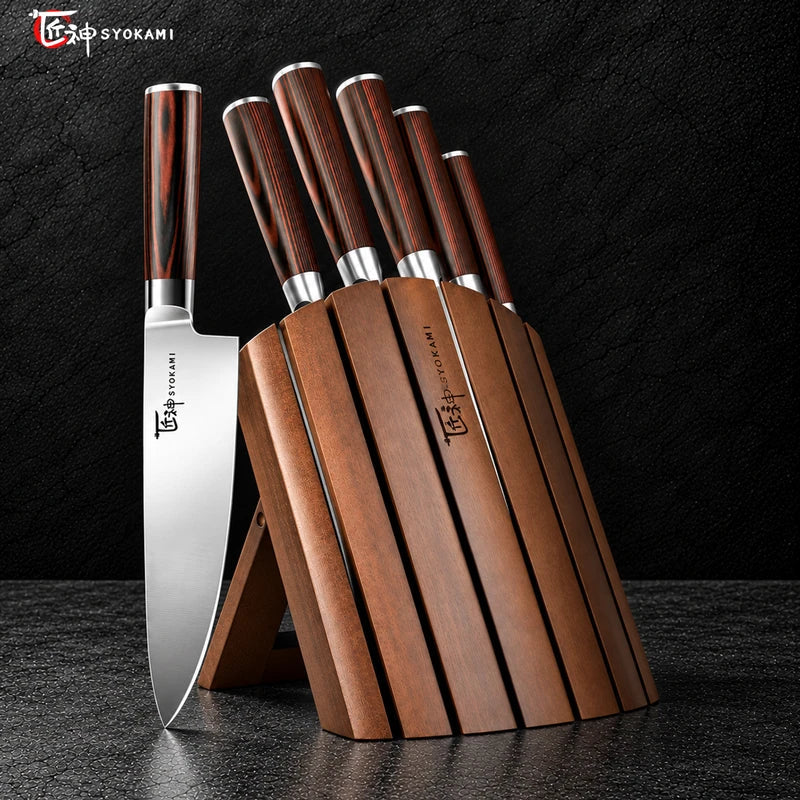
The useful way to learn kitchen knife types is to connect each blade to a job. A chef knife handles much of everyday preparation. A paring knife gives you a smaller working point. A bread knife works through a firm crust with a serrated edge. Specialized meat knives help with particular trimming, carving, and slicing tasks, while steak knives belong at the table.
You do not need to buy every type at once. Start with the meals you make, the ingredients you prepare, and the space you have to work. This guide explains the main kitchen and table knife types, where their uses overlap, and how to choose a practical combination without treating a larger piece count as an automatic improvement.
Kitchen Knife Types at a Glance
| Knife type | Common kitchen task | What to check |
|---|---|---|
| Chef knife | Chopping, dicing, slicing, and mincing | Comfort, usable blade length, and board space |
| Santoku | General preparation, including controlled chopping and slicing | The actual edge profile and your preferred motion |
| Paring knife | Small peeling, coring, and trimming jobs | A manageable blade and a secure grip |
| Kitchen utility knife | Smaller board tasks between a paring and chef knife | Length, edge style, and hand clearance |
| Bread knife | Slicing bread with a sawing stroke | Serrations, blade length, and control |
| Boning knife | Working around bones and trimming meat | Point, profile, and model-specific flexibility |
| Fillet knife | Preparing fish and other tasks suited to a narrow blade | Flexibility and the intended use |
| Carving knife | Portioning cooked roasts and poultry | Blade shape and room to maneuver |
| Slicing knife | Making repeated slices through cooked meat | Usable stroke length and a suitable tip |
| Cleaver | Tasks appropriate to its particular design | Whether it is a thin slicing or heavier-duty model |
| Steak knife | Cutting individual portions at the table | Edge style, handle comfort, and storage |
These names are useful descriptions, but they are not universal specifications. Two knives with the same label can differ in shape, size, thickness, and flexibility. The Culinary Arts Academy Switzerland overview of kitchen knife types is a useful introduction to the categories. When buying a particular knife, read its own specifications and care instructions as well.
Everyday Prep Knives
Chef Knife
A chef knife is a versatile starting point for ingredients prepared on a cutting board. Its broad blade can handle an onion, a handful of herbs, or portions of boneless meat. Many designs have a curved edge that works with a rocking motion, although the amount of curve varies. You can also use a controlled forward or drawing stroke when the ingredient and blade call for it.
Choose a length you can control through the whole cut. More blade is useful only if the board, food, and surrounding space allow you to use it. The SYOKAMI Vintage 8-inch Chef Knife is one current standalone option. For a closer look at fit, read our guide to choosing a chef knife.
The chef knife collection is the current starting point for standalone chef options. Compare the individual product with your preparation routine and give the complete blade and handle enough room to work.
Santoku Knife
A santoku is another general-preparation knife. Many have a relatively flat cutting profile and a less pronounced point than a Western-style chef knife. That can suit cooks who prefer deliberate chopping and slicing on the board. Profiles vary, so look at the actual blade rather than assuming every santoku moves in exactly the same way.
A chef knife and santoku overlap in many ordinary tasks. You may prefer one, use both for different ingredients, or start with a single general-purpose blade. In SYOKAMI’s current assortment, santoku knives are included in selected sets; this guide is not an offer for an unlisted standalone santoku.
Paring Knife
A paring knife offers a short blade for small work, such as coring a piece of fruit, removing a blemish, or making a precise trim. Its compact size can be easier to position where a larger knife would feel awkward. It is not a substitute for a larger blade when the ingredient needs a long, stable cut.
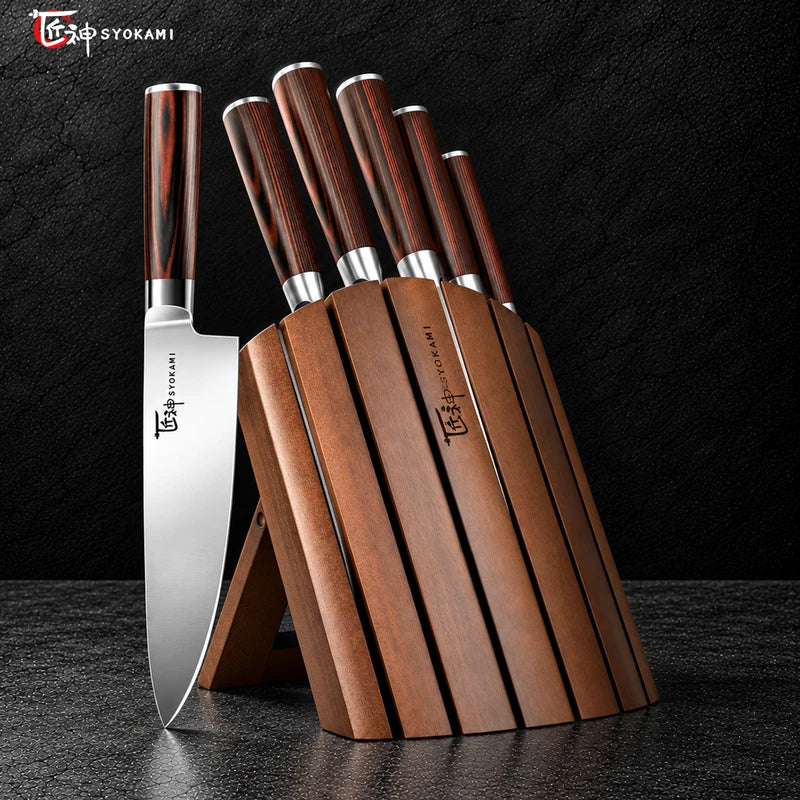
Use a board whenever the task allows, and keep the supporting hand clear of the edge. Small blades are still sharp tools. If you want a paring knife as part of a set, check the individual contents: the Foldable Magnetic Block Set lists a 3.8-inch paring knife alongside five other kitchen knives.
Kitchen Utility Knife
A kitchen utility knife fills some of the size gap between a paring knife and a chef knife. It can be convenient for a small piece of boneless food or a modest amount of board preparation. Utility knives may have a plain or serrated edge, and that difference matters when you choose a cutting motion.
The word “utility” also describes tools outside the kitchen. For food preparation, look for an actual kitchen knife and its food-use instructions. In the current Foldable set, the utility knife is listed as 6 inches. Check the configuration of any other set separately.
Bread Knife
A bread knife usually uses serrations and a back-and-forth stroke to work through crust while limiting downward pressure on the softer interior. A blade that reaches across the loaf helps you maintain a steady path. Let the teeth do the work rather than compressing the bread to make a short blade reach farther.
Bread knives can differ substantially in length and form. A straight bread knife included in a kitchen set is a different product format from a bow bread knife. For loaf-specific choices, see our bread knife guide for sourdough; for the actual cutting process, see how to slice sourdough bread.
Knives for Meat, Fish, and the Table
For a task-based way to choose among these specialists, use our meat-cutting knife guide. It separates raw trimming, work around joints, cooked slicing, and carving. The current meat-preparation collection shows the actual carving, boning, and cleaver products available for those roles.
Start with the meat knife selection guide when you are choosing among trimming, deboning, carving and cleaver tasks.
Boning Knife
A boning knife is intended for controlled work around bones, joints, and the boundaries between meat and unwanted tissue. Its narrower working area and pointed tip can help you approach a small seam. “Boning” describes separating meat from bone; it does not mean the knife is designed to chop through the bone itself.
Blade shape and flexibility differ by model. Some tasks favor a more yielding blade, while others benefit from a firmer one. Start with what a boning knife is used for and check the exact product before assigning it a difficult task.
Fillet Knife
A fillet knife is commonly associated with preparing fish, including work close to skin and bones. Many designs use a narrow, flexible blade, but the useful amount of flexibility depends on the fish, task, and particular knife. A product name alone does not establish how far the blade should bend.
Boning and fillet knives have overlapping uses, yet they are not automatically interchangeable in every situation. Our boning knife vs fillet knife comparison explains the selection criteria. SYOKAMI currently offers a standalone boning knife. Use the current product catalog to check which other designs are available individually or in sets.
Carving Knife
A carving knife helps portion cooked meat, including roasts and poultry. Many designs have a relatively narrow blade and a working point that allows careful positioning. The right size depends on what you are serving and whether you are working around joints or slicing a removed portion on the board.
Carving and slicing labels often overlap. A product sold as a carving knife may have features suited to long slices. Check the blade itself and read carving knife vs slicing knife when the names are making the choice harder.
Slicing Knife
A slicing knife provides room for a long stroke through cooked meat. That can be useful for brisket, a boneless roast, or another large portion that you want to divide into even slices. Some slicing knives have rounded noses, while other designs use different tip shapes.
A long blade needs a sufficiently large, stable board. It also needs a clear path beyond the meat. The SYOKAMI 12-inch Carving Knife has a long, narrow, round-ended profile. Its suitability for your kitchen depends on the work and the space available, not on length alone.
Cleaver
“Cleaver” covers several designs. A relatively thin Chinese slicing or vegetable cleaver can be a general-preparation tool. A heavier meat cleaver serves a different set of tasks. Similar rectangular silhouettes can hide significant differences in thickness, edge design, weight, and intended use.
Do not assume a broad blade can process hard bones or frozen food. Those capabilities must be stated for the exact model. Begin with cleaver types and uses, then choose according to the product instructions and the ingredients you actually prepare.
Steak Knife
A steak knife is for the person eating an individual portion at the table. It is not a replacement for a chef knife during preparation. Steak knives may have a straight or serrated edge, and the handle needs to work comfortably in a table setting as well as in storage.
Buy the number of place settings you need and consider how you will protect the edges between meals. SYOKAMI’s steak knife collection includes current table-knife options. The Classic Steak Knives offer a non-serrated option; select the actual configuration on the product page.
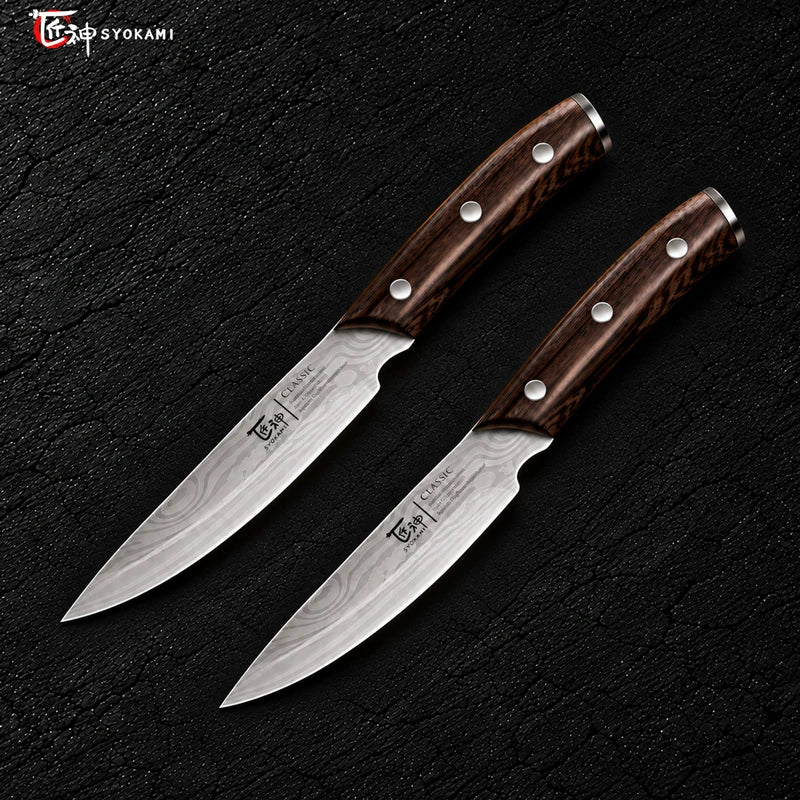
When buying for the table, compare serrated and non-serrated steak knives by cutting motion, maintenance and storage.
Which Knives Should You Start With?
List a few meals you cook regularly. If most begin with vegetables, herbs, and boneless ingredients, a comfortable general-purpose blade deserves priority. Add a smaller knife if you often perform detail work and a bread knife if crusty loaves are part of your routine. Specialist meat knives make more sense when you repeatedly do the tasks they are designed to address.
For example, a cook who buys ready-portioned proteins may get more value from improving their chef-knife fit than from adding several butchery tools. Someone who regularly trims whole briskets and serves large cooked roasts has a stronger reason to consider both a boning knife and a long slicer. A set of steak knives solves a separate dining need.
You can build this combination gradually. A useful new knife should solve an identifiable problem: a blade that cannot reach across a loaf, an awkward tool for small trimming, or insufficient length for repeated roast slices. If you cannot name the task, compare your current tools before adding another.
Choose a Single Knife or a Set
A single knife lets you address one clear need. A set may combine complementary blade shapes with an organized storage system. The better choice depends on how many of the included tools you will use, not on whether one route sounds more complete.
Read the contents line by line. A stated piece count may include a holder, honing steel, shears, guards, or table knives as well as preparation knives. Those pieces can be useful, but they are not interchangeable. The current Foldable set, for example, lists chef, santoku, slicing, bread, utility, and paring knives with a folding magnetic block.
Measure the storage area and allow room to remove each knife safely. Drawer storage, a countertop block, and a roll support different routines. Our kitchen knife set guide explains the space and configuration choices; the knife set collection shows the current products.
Care and Safe Storage Essentials
Use a stable cutting board and leave room for the full movement of the blade and handle. Keep the supporting hand away from the cutting path. If a knife catches, pause and reposition the ingredient instead of twisting the edge or adding uncontrolled force.
For current SYOKAMI knives, follow the supplied model instructions, hand wash, and dry promptly. Protect the edge during storage. Do not leave a loose sharp blade where someone has to search for it by touch. Wash tools appropriately between raw-food preparation and ready-to-eat tasks.
Honing, sharpening, and cleaning solve different problems. Read the knife care and sharpening guide before choosing a maintenance tool. If a listing names a steel grade, our DIN 1.4116 specification guide explains how to check that particular claim; it does not certify the material of every knife in the catalog.
Explore the current kitchen and table knife collection to see available products, then return to the task and configuration that fit your own kitchen.
Frequently Asked Questions
Do I need every kitchen knife type?
No. Choose according to repeated tasks. A useful starting combination for everyday preparation is different from a specialist setup for frequent meat trimming, fish work, or large cooked roasts. Add a knife when it solves a clear gap.
Can a santoku replace a chef knife?
They overlap in many general-preparation tasks. Your preference depends on the actual blade profile, length, and the motions you find controlled. You do not have to own both simply because the names differ.
Are carving and slicing knives the same?
The labels overlap, but typical designs and intended tasks can differ. Look at the tip, length, width, and product guidance. A rounded long slicer and a pointed carving knife may suit different parts of serving the same meal.
Does Japanese-style mean made in Japan?
No. A style description is not a manufacturing-origin statement. For SYOKAMI product fit and background, use the brand buying guide and the exact listing rather than inferring origin from a knife name.
Reading a complete set: an example with twelve knives
A complete set combines several of these roles, but the piece count is not a count of distinct preparation jobs. The current 14-piece rotating magnetic knife set contains six kitchen profiles and six steak knives, plus a steel rod and rotating block. The manufacturer configuration image lists an 8-inch chef knife, 8-inch bread knife, 8-inch carving knife, 6-inch boning knife, 6-inch utility knife and 5-inch santoku, with six 4.5-inch steak knives.
The utility knife in that list is not a separate short paring knife. If a particular peeling or detailed task matters to you, compare the actual blade and working position rather than assuming every set includes the same small knife. The paring versus utility comparison explains that difference, while chef versus santoku covers the overlap between the two everyday preparation profiles.
Read the lengths as the values labeled in the manufacturer’s configuration diagram, not as independent measurements or a performance test. A profile suitable for trimming should not be treated as a bone-chopping tool. A serrated bread edge also needs a different maintenance approach from an ordinary straight edge.
Once the blade roles fit your cooking, check the storage. A rotating block needs more planning than base diameter alone: allow for the loaded arrangement, movement and removal of each knife. Use the set buying guide and storage comparison to connect the knife list to the kitchen where it will be used.