

Boning Knife vs Fillet Knife: Choose by Task and Flexibility
Boning knives are commonly used for separating meat around bones and for detailed trimming. Fillet knives are commonly associated with fish preparation, including work close to skin and bones. Their shapes and uses can overlap, but they are not automatically the same tool.
The most useful comparison is between the tasks you perform and the actual blade designs. Shape, flexibility, length, and control all matter. Avoid choosing from the simple assumption that every boning knife is stiff and every similarly shaped blade will work as a flexible fish knife.
The Main Difference—and the Overlap
The name “boning” emphasizes releasing meat from hard structures and managing detailed meat-preparation work. The name “fillet” often emphasizes preparing fish portions. Both jobs may involve a narrow blade following an ingredient’s contours, which helps explain why the tools can look similar.
A category name does not specify the entire blade. The ZWILLING description of boning and fillet knives recognizes both flexible and stiff boning designs and describes a fillet knife as a thin, flexible member of the family. Compare the model’s stated properties instead of turning a common design tendency into an absolute rule.

Boning vs Fillet Knives at a Glance
| Question | Boning knife | Fillet knife |
|---|---|---|
| What task is usually emphasized? | Separating meat around bones and joints; trimming | Fish filleting and related close work |
| What blade forms are available? | Different curves, lengths, widths, and stiffness levels | Different lengths and profiles suited to the intended fish work |
| Does the name guarantee flexibility? | No; flexible and stiff models exist | Flexibility is common, but check the exact specification |
| What should guide the choice? | The trimming route, access, and control needed | The fish, skinning/filleting task, and required control |
| What is not implied? | Permission to cut through hard bone | Permission to force a blade to bend or twist |
Choose for the Work You Actually Do
Meat, Joints, and Silverskin
If you regularly trim a brisket or separate meat beside a joint, consider how you will position the point and follow the boundary you can see. A suitable boning knife gives you a working area for that detail. Your preferred profile should help you control the route rather than encourage longer, less visible cuts.
Hard exterior fat, silverskin, and the tissue around a joint should not all be treated as the same material. Inspect the ingredient, take manageable cuts, and stop if the edge meets unexpected hard resistance. The boning knife uses guide explains the general role, while brisket trimming provides an ingredient-specific example.
Fish Filleting and Skinning
With fish, think about the size and structure of what you prepare and whether you need the blade to follow a particular contour. The useful length and amount of flexibility can differ between small fish, larger portions, and skinning work. A long blade that suits one job may feel awkward in another.
A flexible blade is not a reason to push it into a severe bend. Follow the maker’s intended use and keep the food positioned securely. If your current knife does not let you see and control the cut, improve the setup or choose a more suitable design instead of trying to compensate with force.
Kitchens That Do Both
Some cooks do enough meat and fish work to justify two different knives. Others can cover their occasional overlapping tasks with one carefully chosen model. Decide from frequency and fit: which tasks happen often, and where does your current blade become difficult to control?
When the work differs substantially, using a specialist for each role may be more practical than seeking a single “all-rounder.” If most of your proteins arrive already portioned and boneless, you may have less need for either specialist. A comfortable chef knife can remain the central everyday tool.
Can One Knife Substitute for the Other?
Sometimes, but assess the specific substitution. A knife that is suitable for a small trimming task is not necessarily suitable for a long fish-skinning stroke. A blade that yields readily may feel different from a firmer one when working around a joint. Neither preference makes the other design universally inferior.
- Check the stated flexibility and intended tasks for the exact model.
- Look at the working point, edge profile, and blade length together.
- Allow room for the full knife and the supporting hand.
- Do not force bending, twisting, prying, or hard chopping to make a substitution work.
- If you cannot confirm suitability, choose a tool specifically intended for the job.
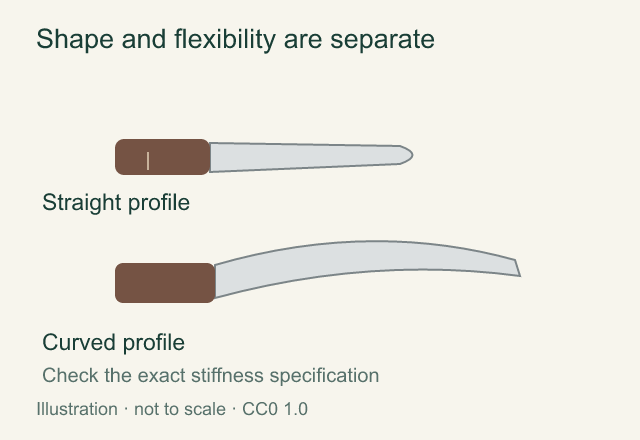
Straight and curved profiles add another choice, but they do not settle the stiffness question. Our curved vs straight boning knife comparison separates those properties so you can evaluate a real product more clearly.
Where Current SYOKAMI Options Fit
The SYOKAMI 6.7-inch Boning Knife is listed as a straight-profile, flexible knife for deboning, trimming, and filleting. Match its stated specifications to the fish and technique; a category label does not establish suitability for every skinning task.

The Vintage Knife Roll Set also lists a boning knife among its included pieces. Check that set’s actual configuration separately rather than assuming the included blade is identical to the standalone product. A set count includes different tools and accessories, not repeated versions of one knife.
For the wider current selection, the meat-cutting knife guide compares the roles of current knives without treating every related category as a separate SKU.
Keep Food-Contact Tasks Separate
Changing from meat to fish or from raw food to ready-to-eat preparation also calls for appropriate cleaning. Wash the knife as directed, dry it promptly, and clean contact surfaces. The USDA cutting-board recommendations address separation and cleaning; a change of blade type does not remove those needs.
Frequently Asked Questions
Is a fillet knife the same as a boning knife?
The categories are related and may overlap, but the usual task emphasis and blade design can differ. Compare the specific products and the work you do rather than relying on names alone.
Can a boning knife be used to fillet fish?
A suitably designed model may cover some fish tasks, but that does not establish suitability for every fish or skinning method. Check its length, flexibility, profile, and intended use.
Are all boning knives stiff?
No. Flexible and stiff boning blades are available. Shape and stiffness are separate attributes, and neither should be inferred solely from a product photograph.
Do I need both knives?
Only if the different tasks you repeat justify them. Identify where one blade is a poor fit, then decide whether a second tool solves that recurring problem.