

What Is a Boning Knife Used For? Tasks, Technique, and Limits
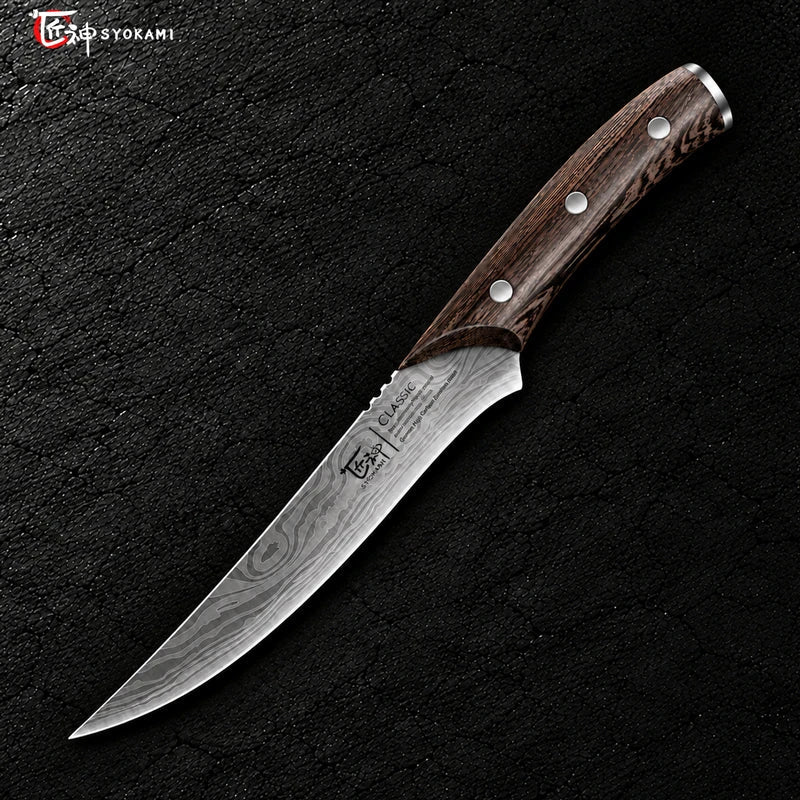
A boning knife is used to separate meat around bones and joints and to make controlled trimming cuts. Its pointed, relatively narrow working area helps you approach seams, fat, and connective tissue without using the broad face of a chef knife for every detail. The word “boning” refers to working around bone, not chopping through it.
The useful question is which parts of your preparation need that control. Trimming a raw brisket, loosening meat beside a poultry joint, and removing a strip of silverskin share some movements, but they do not all require the same shape or flexibility. Choose a specific knife for the tasks you repeat and follow its own instructions.
What Makes a Boning Knife Useful?
A smaller working point can help you see where a cut begins. The rest of the edge follows that initial path, so visibility and a stable ingredient are important. When you can identify the boundary between the tissue you want to remove and the meat you want to keep, a controlled approach becomes more useful than simply applying more force.
The label does not define one standard blade. Boning knives can differ in length, curve, width, and stiffness. The ZWILLING overview of boning and fillet knives explicitly recognizes flexible and stiff boning blades. The tool’s actual specification matters more than assumptions based on the category.

Common Boning-Knife Tasks
Separating Meat Around Bones and Joints
Use the point to approach a visible boundary, then work along it in small cuts. If the path becomes difficult to see, change the ingredient’s position. The objective is to release the meat beside a hard structure, not to drive the knife through that structure.
At a joint, identify where the parts meet before cutting. A sudden increase in resistance is a reason to pause and reassess. Do not use the tip as a lever or twist a narrow blade to separate something that is still held in the wrong place. The right position should give you a more controlled route.

Trimming Fat and Silverskin
A boning knife can be useful for taking small amounts from an irregular surface. Identify the tissue first: hard exterior fat, a softer fat layer, and a thin membrane require different judgment. The goal is a planned trim, not removal of every pale area you can see.
Make a small opening where you can see the boundary and use shallow, measured cuts. Inspect the newly exposed surface before continuing. If too much meat is coming away with the trim, stop and adjust the position or approach. For a complete ingredient-specific example, read how to trim brisket.
Preparing Poultry
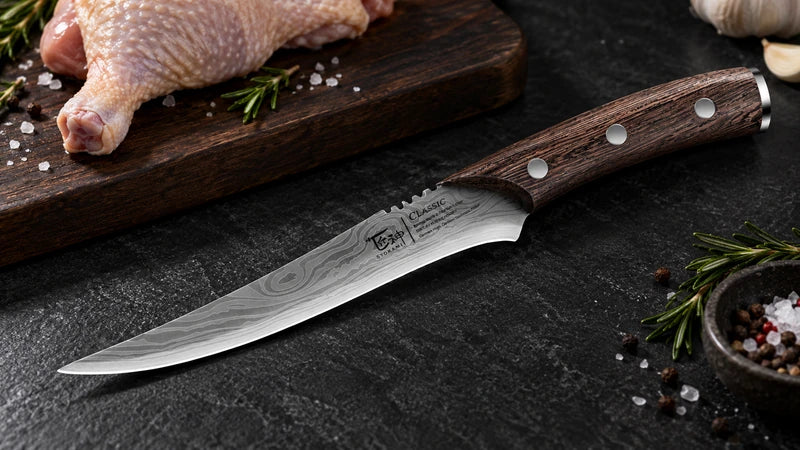
Some poultry preparation involves following contours close to bones and joints. A suitably specified boning knife can help with that detailed work. Keep the food stable and move it as needed rather than reaching around it with the knife. Any difficult joint should be identified and approached deliberately.
Raw-poultry preparation and carving a cooked bird are different stages. The turkey carving guide covers the cooked serving process. It should not be read as a raw-butchery tutorial, and a boning-knife use guide does not establish that a particular model is intended to process every part of a bird.
Where Fish Work Overlaps
A narrow working blade can appear in both meat and fish preparation, but that does not make every boning knife a fillet knife. Fish size, skinning technique, blade length, and the amount of flexibility you need all affect the choice. A product that works well for one task can feel unsuitable for another.
For frequent fish work, compare the intended uses of the exact models rather than stretching a meat-trimming tool into an unsupported role. Our boning knife vs fillet knife guide explains the differences and where a carefully chosen knife may cover overlapping tasks.
Shape, Flexibility, and Size Are Separate Choices
| Property | What it describes | What it does not establish |
|---|---|---|
| Curved or straight profile | The outline and path of the working blade | Its flexibility rating |
| Flexible or stiff blade | How the particular blade is designed to yield | Whether it is curved or straight |
| Blade length | The named cutting-blade dimension | The full length including the handle |
| Fine working point | The shape available to begin a detailed cut | Permission to pry or chop hard material |
A curve may change the approach to a contour. A straighter section may fit another cutting path more naturally. Neither shape is universally correct for all ingredients. Read curved vs straight boning knives if the distinction is part of your purchase decision.
Do not bend a blade by force to discover its rating. Use the specification and supplied guidance, or ask the maker about the exact model. A useful handle and sufficient working space also matter; the blade cannot remain controlled if the ingredient keeps sliding or the handle has nowhere to travel.
Basic Handling: Keep the Cut Visible
Begin with a stable board, a clean knife, dry hands, and an ingredient you can position securely. Clear packaging and loose items from the cutting path. Keep the supporting hand away from where the edge will move, and arrange the food so you can see the tissue boundary before starting.
- Identify the part you want to remove and the meat you intend to keep. Do not begin a hidden cut by feel.
- Approach with the working point in a controlled position. Make a short cut that reveals the boundary.
- Follow the visible route in manageable strokes. Let the edge work instead of pressing or levering through resistance.
- Set the knife down securely before making a substantial repositioning of the ingredient.
- Check the exposed surface and adjust the next cut. A clean route is more useful than speed.
The amount removed and the exact cutting angle depend on the ingredient and task. Generic illustrations cannot establish one safe position for every joint or piece of meat. Use them to understand the sequence, then work only where you have a stable ingredient and a visible, controlled path.
Tasks to Leave to Another Tool
A boning knife is not a bone saw. Do not treat its fine point as a pry bar or use a narrow blade for chopping impacts unless the exact product is specifically intended for that work. Hard bones, frozen blocks, and obstructed joints can require another appropriately specified tool or preparation method.
If the food is too large to position securely, change the setup before cutting. If the edge does not move through the intended tissue in a controlled way, inspect the route and the knife’s condition. More force is not a substitute for the right position, a suitable blade, and appropriate maintenance.
Does Your Kitchen Need a Boning Knife?
It makes more sense when detailed meat trimming or work around joints is a repeated part of your cooking. A household that mainly buys ready-portioned boneless ingredients may find a suitable chef knife covers most preparation. A specialist should earn its place by solving a recurring task.
The SYOKAMI 6.7-inch Boning Knife is a current standalone option. Check the listing and supplied instructions for its actual configuration and use. If you are choosing among several meat tools, the meat-cutting knife guide compares the roles of boning, carving, slicing, and cleaver designs.
Plan storage for the whole tool, including the handle and fine point. A nominal blade size does not describe the complete knife’s length. Suitable protection should let you retrieve the handle without searching around the edge, and should keep the point from contacting other loose utensils.
Cleaning After Raw-Meat Preparation
Wash the knife according to its instructions, dry it promptly, and protect the edge in storage. Keep raw-food work separate from ready-to-eat tasks and clean the board and other contact surfaces appropriately. The USDA cutting-board guidance explains why separation and cleaning remain important regardless of which knife you choose.
Frequently Asked Questions
Can a boning knife cut through bones?
Boning means separating meat around bone. Do not infer bone-chopping capability from the name. Use the manufacturer’s instructions for the exact model and select another appropriate tool when the task involves hard bone.
Should a boning knife be flexible?
That depends on the job and the specific knife. Flexible and stiff models exist. Check the actual rating and intended use rather than assuming all boning blades should bend in the same way.
Can I use a boning knife if I already have a chef knife?
Yes, when you regularly need a narrower working point for detailed trimming or joint work. Owning a specialist is less important than identifying a task your current tool does not handle comfortably.
Can I use it to fillet fish?
Some designs can serve overlapping tasks, but suitability depends on the fish, technique, blade shape, and flexibility. Check the particular model instead of treating every boning knife as a specialized fillet knife.
A boning knife included in a broader kitchen set
A set can include a boning profile alongside everyday preparation and table knives. The manufacturer configuration image for the 14-piece rotating magnetic knife set lists a 6-inch boning knife. That stated length does not make it identical to the separately sold 6.7-inch or 6.5-inch SYOKAMI models, and this guide does not transfer their flexibility or construction specifications to the set knife.
Use the actual set blade’s instructions and profile when choosing a trimming job. Do not use it to chop through bones. For tasks where a larger preparation blade is more appropriate, choose that tool instead of extending the boning knife’s role simply because it is close at hand in the block.
Before comparing a standalone boning knife with a complete set, list the jobs and tools you already have. The essential knives guide helps establish the role; sets versus individual purchases compares the purchase paths. A useful specialist blade is a task decision, while a complete set also adds storage, table knives and potentially overlapping preparation profiles.
After meat preparation, follow appropriate food-hygiene practices and the knife’s washing instructions. The wood-handled rotating set calls for hand washing and immediate drying. Return the blade to its intended position only when clean and dry; use the knife cleaning guide and block cleaning guide for the separate care routines.