

Serrated vs. Non-Serrated Steak Knives: Which Edge Suits Your Table?
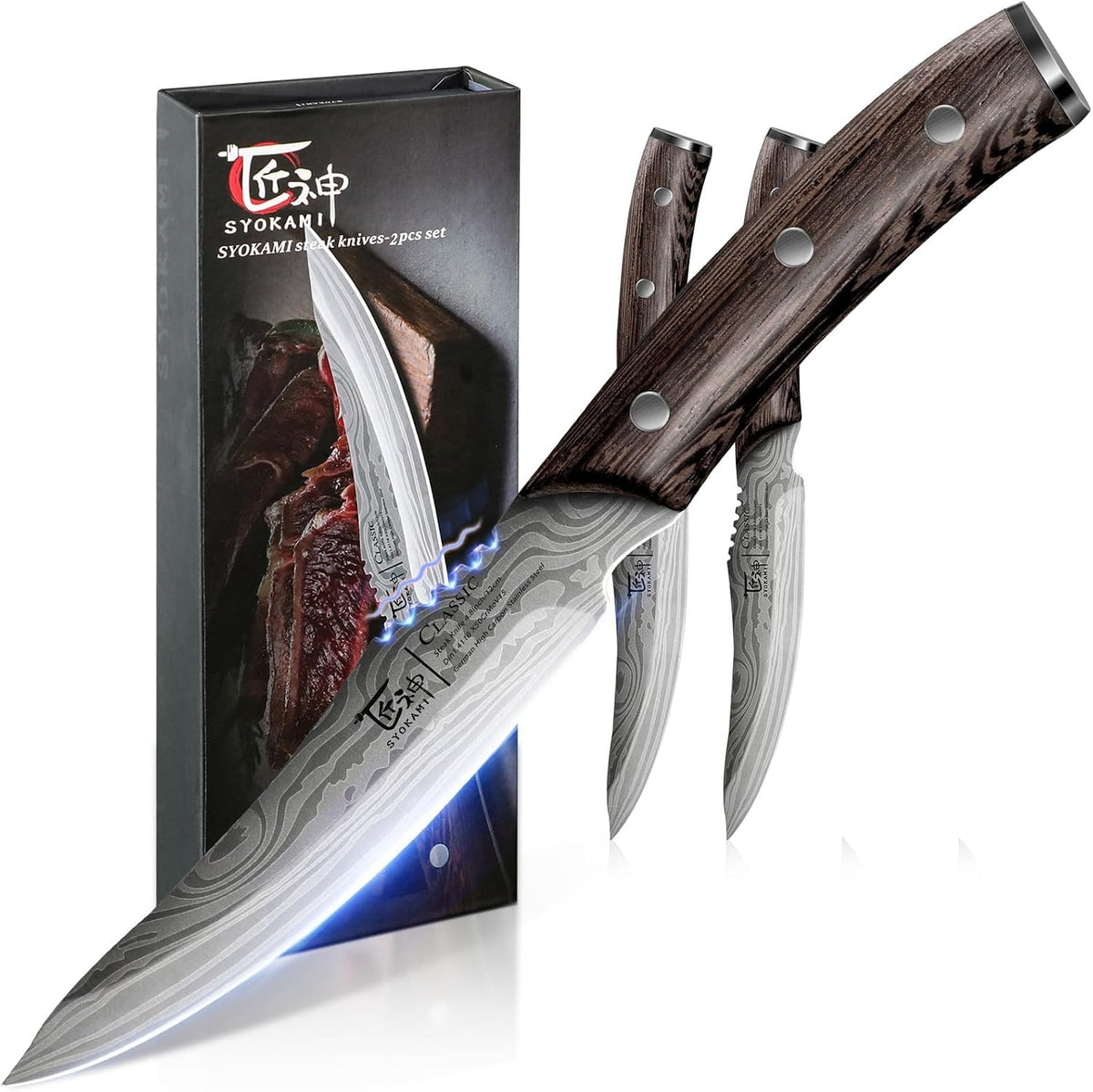
Choose a sharp, non-serrated steak knife if you like a smooth drawing cut through tender cooked meat and want a continuous edge you can maintain with a compatible straight-edge sharpener. Choose a serrated knife if a pronounced crust or a tougher surface often makes it difficult to start a cut. Both can work at the table. The condition of the edge, the food and your cutting motion affect the result.
This comparison explains edge design and care, with current SYOKAMI straight-edge sets as shopping examples. Think about what you regularly serve, what feels controlled on your plate and how you want to maintain the knives.
Compare the Two Edges
| What matters | Non-serrated (straight edge) | Serrated |
|---|---|---|
| Blade design | A continuous cutting edge | Teeth and recessed scallops. Some knives are serrated along only part of the blade. |
| Starting a cut | Start with a controlled drawing stroke and a sharp edge. | Teeth can catch a firmer surface to start the cut. |
| Common fit at dinner | Tender steak, pork chops and other cooked boneless portions. | A pronounced crust or firmer outer layer that benefits from short sawing strokes. |
| Maintenance | Use a compatible method for the exact straight edge. | Check the maker’s instructions. Scallops may need a suitable tapered tool or professional service. |
Choose for the Meals You Actually Serve
Tender steak or a boneless roast. A sharp straight edge can make a clean drawing cut through a tender portion. Hold the food steady with a fork, work with a small piece, and let the edge travel through it. If you repeatedly have to press down to get through a familiar cut, inspect the edge condition and your technique before deciding you need a different blade.
A firm sear or tougher surface. A serrated profile can give the first stroke a point of purchase. Use a short, controlled sawing motion and keep the fork and fingers clear of the blade path. Larger teeth, fine teeth and partial serrations feel different, so inspect the actual edge when choosing a set.
Mixed dinners and regular guests. Choose by the meal you serve most often, the grip you like and the number of place settings you need. Compare blade and overall lengths with the room on your plates. Check how the knives will be separated in storage and whether you can maintain the chosen edge.
Try a Side-by-Side Comparison at Home
If you already own both styles, cut comparable pieces from the same cooked steak on the same type of plate. Compare a crusted section with another crusted section, and a tender interior section with another interior section. A worn blade and a newly sharpened blade can tell you more about maintenance than edge design. Check both edges and use the motion each knife is designed for.
Notice how easily the cut begins, how much pressure you use, and how cleanly the slice separates. Repeat in a different part of the steak if one bite has a thicker crust or more connective tissue. This gives you a practical way to decide which edge you prefer with the food and tableware you use.
What Changes When the Knives Need Care?
For a straight edge, use a tool and method that the maker specifies for the blade. Check the angle and edge shape before choosing a stone, rod or guided sharpener. A serrated edge has recesses and tips to preserve. Find the maker’s instructions for that pattern before working on it, especially on a blade with very small teeth. See the kitchen knife sharpening guide for how to select a compatible method.
A plate is a hard surface. Use light pressure at the end of the cut and avoid scraping the edge sideways across the plate. Do the heavier portioning on a suitable cutting board with a prep knife. Follow the knife maker’s washing instructions, dry the knives promptly and store the edges separated. Our kitchen knife cleaning guide covers hand washing and drying.
If your straight-edge table knife has lost some cutting performance, identify the tool and edge first. The honing versus sharpening guide helps separate routine edge care from restoring a worn bevel.
Three Straight-Edge Sets from SYOKAMI
The three models below use a 4.8-inch plain edge. Compare their pack sizes and storage if a straight edge fits the way you eat.
| Option | Set or storage choice |
|---|---|
| Classic 4.8-inch Steak Knives | Presentation packs of two, four, six or eight. Check the selected variant for the listed storage accessories. |
| Six Steak Knives with Drawer Organizer | Six knives with a drawer-style wood organizer. Check its footprint against the storage space you use. |
| Six Steak Knives with Folding Wood Case | Six knives with a folding wood case and individual slots. Check room for the closed case and where you will open it. |
For more about the current models, see the SYOKAMI steak knife collection. If you are choosing a knife to prepare or portion a roast before it reaches the plate, see the meat knife selection guide.
Common Questions
Do serrated steak knives need sharpening?
Serrations can lose effectiveness with use. Follow the maker’s maintenance instructions for the particular pattern, or ask a professional sharpener which service is suitable.
Which steak knife is easier to sharpen at home?
A continuous straight edge is generally simpler to service with a compatible straight-edge tool. Check the maker’s guidance for the exact edge.
Is a serrated edge better for every steak?
Choose by the food you typically serve. A serrated blade can help start through a firm exterior. A sharp straight edge can make a smooth drawing cut through a tender portion.
Sources and Product References
Prepared by SYOKAMI Editorial. General edge designs and care methods are described by ZWILLING’s steak knife guide and WÜSTHOF’s straight-edge example and care guidance. The product table uses the current SYOKAMI listings linked above.