

Cleaver vs Chef Knife: Compare the Right Types Before You Choose
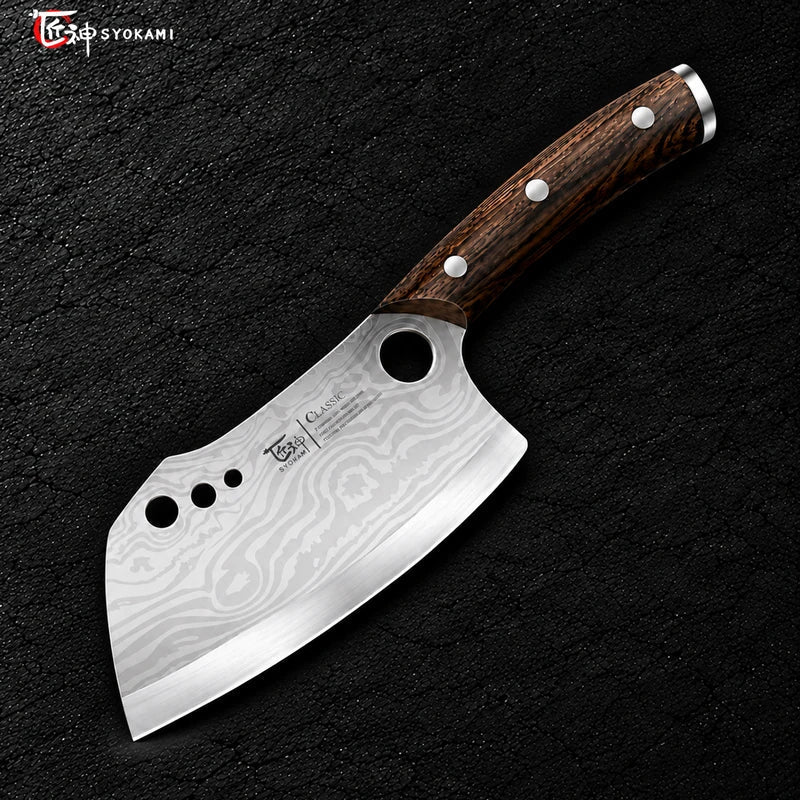
A cleaver and a chef knife can overlap in everyday preparation, but first identify the cleaver you mean. A relatively thin Chinese slicing cleaver is a closer comparison to a general-purpose chef knife than a heavy meat cleaver is. Similar broad silhouettes can represent very different tools.
The useful choice depends on the ingredients you prepare, the blade motion you control comfortably, and the particular model’s intended use. Begin with those questions instead of treating “cleaver” as a single alternative to every chef knife.
First, Which Cleaver Do You Mean?

A Chinese slicing or vegetable cleaver often brings a broad face and an edge profile suited to controlled preparation on the board. A heavier meat cleaver emphasizes a different role. Neither category establishes the exact thickness, weight, edge geometry, or hard-material capability of a specific knife.
A chef knife is a general-purpose kitchen blade, usually with a broad heel and a point. Many have enough edge curvature for rocking work, although profiles vary. The Culinary Arts Academy Switzerland knife overview provides a useful introduction to the categories; the actual product information is still needed to judge a particular model.
For the distinction within the cleaver family, use Chinese cleaver vs meat cleaver. This page compares the designs as possible tools for your everyday kitchen routine.
Cleaver vs Chef Knife at a Glance
| Decision point | Slicing-cleaver type | Chef-knife type |
|---|---|---|
| Outline | Broad, often more rectangular | Broad heel tapering toward a point |
| Edge path | Frequently relatively flat, with model variation | Frequently curved, with model variation |
| Typical preparation | Controlled slicing and chopping suited to the design | Chopping, slicing, dicing, and mincing |
| Working point | May be less pronounced or positioned differently | Usually a more obvious point for controlled detail |
| What to assess | Height, profile, grip, visibility, and task fit | Length, profile, grip, tip access, and task fit |
| What is not guaranteed | Bone-cutting ability from the broad face | Suitability for hard bone or frozen material |
A heavy meat cleaver belongs in an additional comparison. Do not read the slicing-cleaver column as permission to use a heavy-duty chopping tool for every daily task, or to use a thin blade for impacts it was not designed to take.
Compare the Work You Do Every Day
Vegetable Prep and Controlled Chopping
If most meals begin with vegetables, think about how you like the edge to meet the board. A suitable flatter profile can work with deliberate chopping and slicing. A curved chef-knife edge may suit a rocking motion. Some cooks use a combination of movements, and individual knives can sit between these broad descriptions.
Start with a manageable piece of food, a stable board, and enough room for your hands. The blade should follow a path you can see and control. If the ingredient keeps moving or your grip becomes strained, improve the setup rather than expecting a different knife name to solve the problem.
The height of a slicing cleaver can feel useful for larger ingredients, but it can also obscure the supporting hand. A chef knife’s profile provides a different view. Whichever tool you choose, keep guiding fingertips away from the cutting path and check their position as the food gets smaller.
Boneless Meat Preparation
A suitable chef knife handles many ordinary cuts in boneless meat. A slicing cleaver may also serve suitable boneless tasks within the maker’s guidance. Compare the actual cutting route, the size of the portion, and how the blade’s height and length fit the board.
Neither general-purpose choice needs to become the answer to detailed trimming or repeated long slices. A boning knife may make close work around a contour easier to position; a long carving or slicing knife may give more usable travel through a cooked roast. The meat-cutting knife guide explains those separate roles.
Precision and Tip Work
A pointed chef knife can offer an obvious place to begin a small controlled cut, but “precision” is not a quality that comes from a point alone. The knife must be manageable and the food must remain supported. For a very small job, a suitable smaller blade may be easier to position than either large option.
A cleaver’s point, front corner, or other working area depends on the actual design. Inspect the model rather than assuming all rectangular blades have the same useful corner. Do not use an unfamiliar opening, notch, or profile feature as a grip without the maker’s instructions.
Tasks Requiring Another Tool
Hard bone, frozen blocks, levering, and twisting can fall outside the intended use of both knives. A broad face does not establish permission for these tasks, and a familiar chef knife should not be forced through them either. Select an appropriately specified tool or change how the ingredient is prepared.
If a knife catches, stop and inspect the route. Increasing force before you know what is obstructing the edge makes control worse. A tool that is appropriate for the task should be used with the movement and limits the maker provides.
Handling, Space, and Familiarity
Compare the full knife, including the handle. A nominal blade length does not tell you whether the tool will fit your work area or storage. Leave clear space around the board and consider where the edge will finish each stroke.
Weight and balance must be judged on the particular product. Two blades with similar outlines can feel different in the hand. Do not infer one number or performance rating for all chef knives or all cleavers. If you cannot handle a knife before ordering, read the actual dimensions and ask specific questions about the model.
Familiarity can be a practical advantage. A profile you control well may serve your routine better than a new category bought because it looks more professional. If you try another design, learn its permitted motion on manageable ingredients and assess what it changes in a repeated task.
Where Current SYOKAMI Models Fit
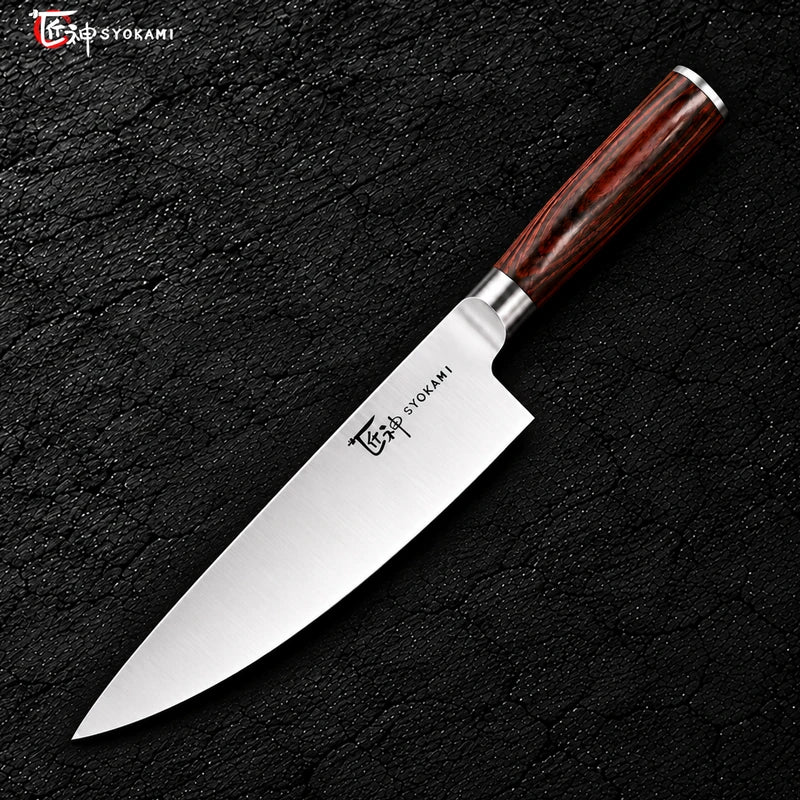
The Vintage 8-inch Chef Knife is presented for chopping, slicing, dicing, and mincing suitable ingredients. Its current profile has a gently curved plain edge and a pointed front. If you are choosing your first general-purpose knife, the chef-knife buying guide explains fit and useful selection questions.
The Artsy 7.7-inch Cleaver has a distinctive shape, two cutting zones, and separate blade openings. Its current information describes suitable vegetable and boneless-ingredient preparation, with model-specific guidance for the rear zone. Do not automatically label it a Chinese slicing cleaver or a universal heavy meat cleaver.
Use cleaver uses to understand its features and the wider family. Compare the actual role you need with the current product’s instructions rather than asking one product photograph to prove every category claim.
Choose for Your Cooking Routine
- Write down the few preparation tasks you repeat most often.
- Identify whether your current problem is blade profile, access, length, grip, or working space.
- Compare specific models that address that problem.
- Check the permitted uses, care routine, and storage needs.
- Add a second knife only when it solves a recurring gap.
You can prefer a slicing cleaver for much of your routine, prefer a chef knife, or use different tools for different parts of a meal. The useful outcome is a setup whose purpose you understand and whose movements remain controlled.
Frequently Asked Questions
Can a Chinese cleaver replace a chef knife?
A suitable slicing design can cover many overlapping daily tasks. Whether it replaces your chef knife depends on the particular profile, the jobs you repeat, and your control. A heavy meat cleaver is a different case.
Is a meat cleaver good for everyday vegetables?
First identify the actual design and its intended use. A heavy-duty tool may be unnecessary or awkward for routine preparation, while a slicing cleaver may be intended for it. The shared name does not settle the question.
Which is better for precise work?
Choose a manageable blade and working point for the task. A pointed chef knife can be useful for some detail, but a smaller or specialist knife may be more appropriate for other jobs. Fit and visibility matter.
Do I need both?
Only if your own preparation benefits from both. Owning one example of each category is not a requirement for a practical home kitchen.