
Blade name
A 6.7-inch blade for close preparation around contours.

Your selected configuration is shown above. See the included items below.
Free US shipping. Canada rates at checkout.
20% off your first order: use WELCOME20 at checkout. Eligibility and final discount confirmed at checkout.
*Covers defects in materials and workmanship. Full terms apply.
One 6.7-inch boning knife.
Hand wash and dry immediately. Use a suitable cutting board, protect the edge during storage and keep knives out of reach of children. Follow the product-specific instructions included with your order.
See our shipping policy, refund policy and warranty terms. Questions before ordering? Email us.
A curve for close work, a fine point for the next small cut. The 6.7-inch Boning Knife brings a specialist profile to meat preparation, with a patterned blade face, a shaped wooden handle and room to work deliberately around an ingredient’s contours.
Japanese attention to the relationship between shape and use informs this design. Here it appears in the transition from the broader blade root to the pointed tip, the short textured spine and the fitted wooden grip. Choose a stable board, make small controlled cuts and finish by caring for the surfaces that meet your hands and food.
One 6.7-inch Boning Knife is shown. Food, boards, dishes and linen are styling props.
The curved profile narrows toward the tip, giving detailed preparation a smaller working point. The photograph shows the blade following the edge of a poultry joint while the other hand keeps the ingredient stable and clear of the cutting path.
Trace the boundary between meat and bone with short, controlled strokes rather than trying to cut through the bone. Reposition the ingredient as the angle changes. Blade flexibility is part of this specialist profile, but it does not replace careful technique: do not force a bend, pry with the tip or use the knife to chop hard joints.
The complete side view keeps the broad root, curved cutting profile and fine upswept point in one line. The named 6.7-inch size refers to the blade; the wooden handle adds length to the whole tool and deserves space on the board and in storage.
A specialist boning shape serves a different purpose from the broader chef knife or longer carving knife. Choose it when preparation calls for following a contour, trimming a smaller area or making measured cuts close to a joint. Before starting, give both hands a stable position and leave space around the full knife.
A 6.7-inch blade for close preparation around contours.
A broader root transitions toward a fine pointed tip.
Allow for the blade and handle together when choosing protective storage.
In this low side view the knife lies flat on its handle side, with the blade plane horizontal. The thicker wooden handle supports the thinner steel, leaving a small visible space beneath the blade. This is a resting position, separate from the way the knife meets the board during a cut.
The relationship changes with the surface and the position of the knife. Set it down securely on a clean, stable area with the edge away from hands and the handle within reach. A visible gap is not a hygiene claim: wash and dry the knife after use and keep raw-food preparation separate from ready-to-eat food.
Short rounded notches sit on the spine next to the handle. The portrait close-up shows this small textured area beside the wood grain and metal fittings, keeping the grip and blade root visible together.
Keep the main hold on the shaped handle and follow the supplied grip guidance. Start with clean, dry hands, maintain control through each short stroke and keep the guiding fingers behind the cutting path. After use, clear residue from the notches and dry the wood and metal joins promptly.
The intact handle photograph shows three plain silver rivets set into dark wood grain. A visible metal border follows the grip, finishing at a silver rear cap. Seeing the complete knife keeps these fittings connected to the curved blade they support.
The shaped grip gives the hand a defined place to hold during detailed preparation. Inspect the knife before use, keep its fittings clean and avoid prolonged soaking. Hand washing and prompt drying care for the wooden surface and its metal joins. Let the knife dry before returning it to protective storage, with the point and edge kept clear of loose utensils.
The separate configuration photograph shows the complete knife, from fine point to silver rear cap. The purchase includes the knife described below; the food, boards and linen in the preparation photographs help explain use and are not part of the configuration.
One 6.7-inch boning knife.
Exactly one knife is shown. Styling props are not included. Contact SYOKAMI to confirm current packaging and any supplied edge protection.
Follow the joint with short strokes.
Stabilize the portion on a clean board and approach the boundary between meat and bone with the tip. Reposition the ingredient as you work, keeping the guiding hand behind the cutting path.
Do not chop through bone or force a hard joint. Clean the knife and preparation surface before moving to another food.
Give the detail its own cutting path.
Work with a stable, manageable portion and remove small areas of suitable fat or connective tissue with measured cuts. Turn the ingredient to keep the knife travelling away from the guiding hand.
Keep the edge sharp according to the supplied guidance. Choose a suitable tool for frozen ingredients, hard bone or tasks requiring force.
Control the direction of each trim.
Set a manageable fillet securely on the board. Use small deliberate strokes suited to the area being trimmed and keep the guiding fingertips clear as the shape changes.
Inspect and remove bones appropriately rather than chopping them with this knife. Wash and dry the knife after raw-fish preparation.
The fish preparation scene shows the curved blade working along a smaller trimming path. The handle stays in a deliberate grip and the guiding hand holds a stable part of the fillet outside the cutting route. A separate dish leaves room on the board for the next portion.
Choose a manageable piece, inspect it for bones and adjust the working angle as the trim progresses. Keep strokes measured rather than forcing the point. Raw fish calls for clean tools and a dedicated preparation surface; wash and dry the knife before the next task.
Preparation photography illustrates use of one knife. Food and styling props are not included.
The boning profile serves close preparation around an ingredient’s contours. Compare it with the broader chef knife for general chopping and the long carving blade for serving slices. Current product details and prices are shown below.
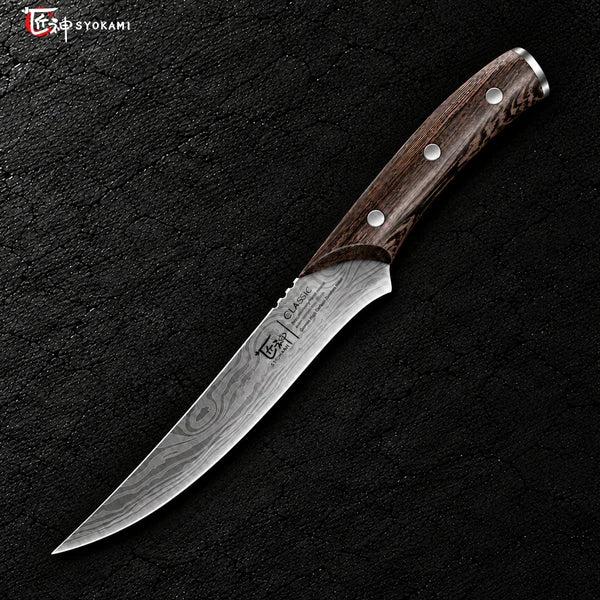
$36.99 USD
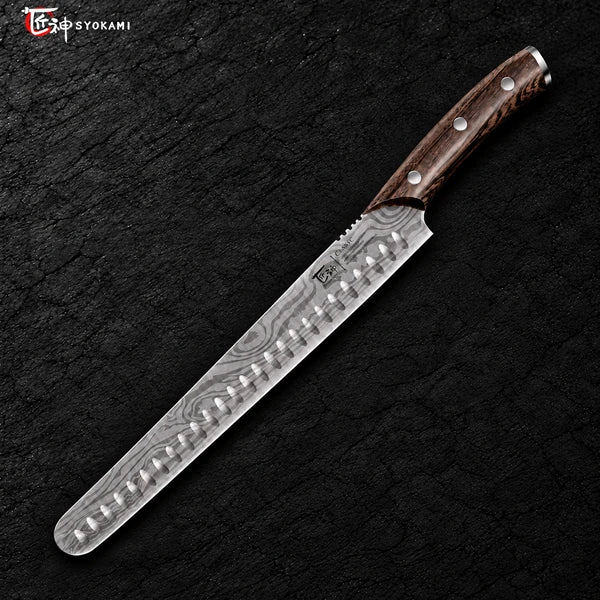
$39.99 USD
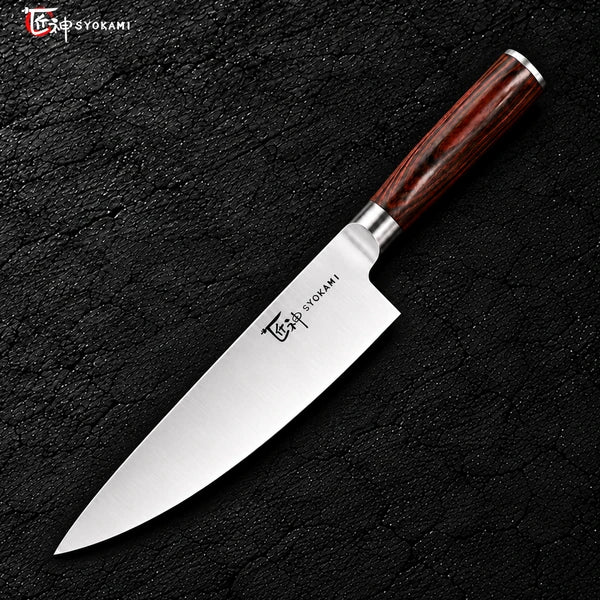
$24.98 USD
Published feedback belongs to this 6.7-inch Boning Knife product. The highlighted excerpts come from the same complete reviews below. Explore every star rating and use the sorting controls to read different experiences.
Have a question about choosing this knife? Ask SYOKAMI before ordering.
Wash the knife by hand and dry the patterned blade, textured spine and wooden handle promptly. Work carefully around the fine point and continuous cutting edge, keeping fingers away from the edge during cleaning.
Avoid prolonged soaking and follow the supplied maintenance guidance. Choose protective storage for the complete knife and keep its point and edge apart from loose utensils. Before the next use, inspect the condition of the blade and fittings and prepare a clean, stable board.
One 6.7-inch boning knife. Food, boards, dishes and linen in the photographs are styling props and are not included; ask SYOKAMI about current packaging.
It is the nominal blade size in the current product name. Allow additional space for the handle when planning a board or protective storage.
Use it for controlled separation of meat from bone. Choose an appropriate tool for hard bones, joints, frozen ingredients and forceful chopping tasks.
No. Use measured strokes suited to the ingredient. Do not force a bend, twist, pry with the tip or use blade flexibility as a strength test.
No. The photograph shows how the thicker handle supports the blade in one resting position. Use clean surfaces and wash and dry the knife after use.
Hand wash and dry promptly. Avoid the dishwasher and prolonged soaking; follow the supplied maintenance instructions.
The boning knife has a shorter curved profile and fine working point for detailed preparation. The longer carving knife provides room for extended slicing strokes and serving portions.
Free US shipping. Canada rates are shown at checkout. Use WELCOME20 for 20% off an eligible first order. Eligibility and final discount are confirmed at checkout. Read the shipping information.
Read the return eligibility and instructions and warranty terms. Contact SYOKAMI with your order number and product details for help.
A specialist profile for the small cuts that shape the meal.
Roast carving, large fruit and longer slicing tasks.
Vegetables, boneless meat and everyday meal preparation.